

one blazer after another
after the hunt made me feel a lot of things

i forgot how sexy andrew garfield is.
that’s probably a silly thing to say about someone — an actor and likely, by extension, an attention whore! — who always seems to be around, making frequent public appearances to promote his own sexiness and maybe an upcoming project of his, but it’s the truth. and for what it’s worth, i forgot because it’s been so long since garfield has starred in a film that actually weaponizes that sexiness, actively basks in it, uses it to confuse the viewer.
i’ve no problem admitting that andrew garfield as he’s presented in after the hunt, the latest from not-a-provocateur (lol?) luca gaudagnino, confused me quite a bit. i don’t claim to be an expert on what, exactly, guadagnino is trying to get us to think about and feel in after the hunt, as this film has smoke for everybody but still can’t figure out what that amounts to (more on that later). what i do know is that garfield looks damn good in it, and it’s an aggressively conscious choice on guadagnino’s part. it’s the most important thing in this film solely because it is its most consistent. it is the thing it pays the most attention to. garfield is this film’s patrick zweig: the scruffy-sexy poor guy who weaponized his hotness in order to clamber out of destitution and obscurity. his hank gibson is surely the hottest professor at yale university, or at least the hottest professor who knows he’s hot. he’s the kind of professor who can get away with wearing the same outfit — a denim button down from polo ralph lauren, matching blue jeans, and a chunky sweater; downright pornographic — twice in a row, and no one will notice. (as he goes out of his way to show both chest and forearm whenever possible, at least one repressed pupil will probably jump for joy.) he’s the professor who can suck up all the air at his coworker’s dinner party, manspreading on her couch, legs wide as the rio grande, not-so-subtly making eyes at said coworker’s prize pupil — who happens to be a gay woman — and think anything he’s doing is going to turn her out.
hank’s sexiness, his reckless charm, is kind of the only thing after the hunt really believes in — because when that same pupil (ayo edebiri’s maggie) accuses him of sexual assault the very next day, there’s maybe a little part of you (the disgusting fiend in you, if you’re anything like me) clinging to a tissue-thin shred of denial. not very feminist of me, a girl who believes in believing women, to admit. but it’s clear — from guadagnino’s own comments to after the hunt’s head-scratching promo1 — that’s exactly what we’re meant to feel. it’s the most successful feeling this film instilled in me, and i welcomed it only because everything else felt either half-baked or ham-fisted.
despite that tonal whiplash, i found i enjoyed this film, or was at least intrigued by it. it gives you a lot to chew on; it wants to reach out and snatch you down from your high horse. (and before you say “i’m not on a high horse,” just don’t. we’re all on a horse, guys.) it’s just sad that i walked out of it thinking less about ayo’s stricken doctoral candidate or julia roberts’ double-edged professor — who finds herself caught in the middle of this pre-MeToo2 debacle — than i did about its fabulous white male divas and the immaculate blazers they were wearing.
after the hunt is a meditation on generational disparity disguised as a psychosexual “he said, she said” thriller. it is also, i have to assume, a feature-length coda for jonathan anderson’s tenure at loewe.3 he is not the costume designer of after the hunt, but he is always designing things for guadagnino these days, and there’s no way those aren’t his blazers draping the shoulders of julia and ayo and the rest of this beautiful talented cast. julia in particular looks fabulous in every scene: she’s rightfully the center of attention at that aforementioned dinner party, swathed in a crisp all-white suit and an icy blonde, bacall-coiffed bob. i love the way clothes and hair tell a story in a guadagnino movie, and after the hunt is no exception. here they tell us that julia’s alma imhoff is an iceberg, untouchable and irrepressible. she’s maybe the sole female faculty member in yale’s philosophy department, a role for which she had to brace against crushing waves of misogyny and bigotry. now she’s up for tenure, with only hank left standing as her competition. it’s all she’s ever wanted, though you’d never know it to look at her.
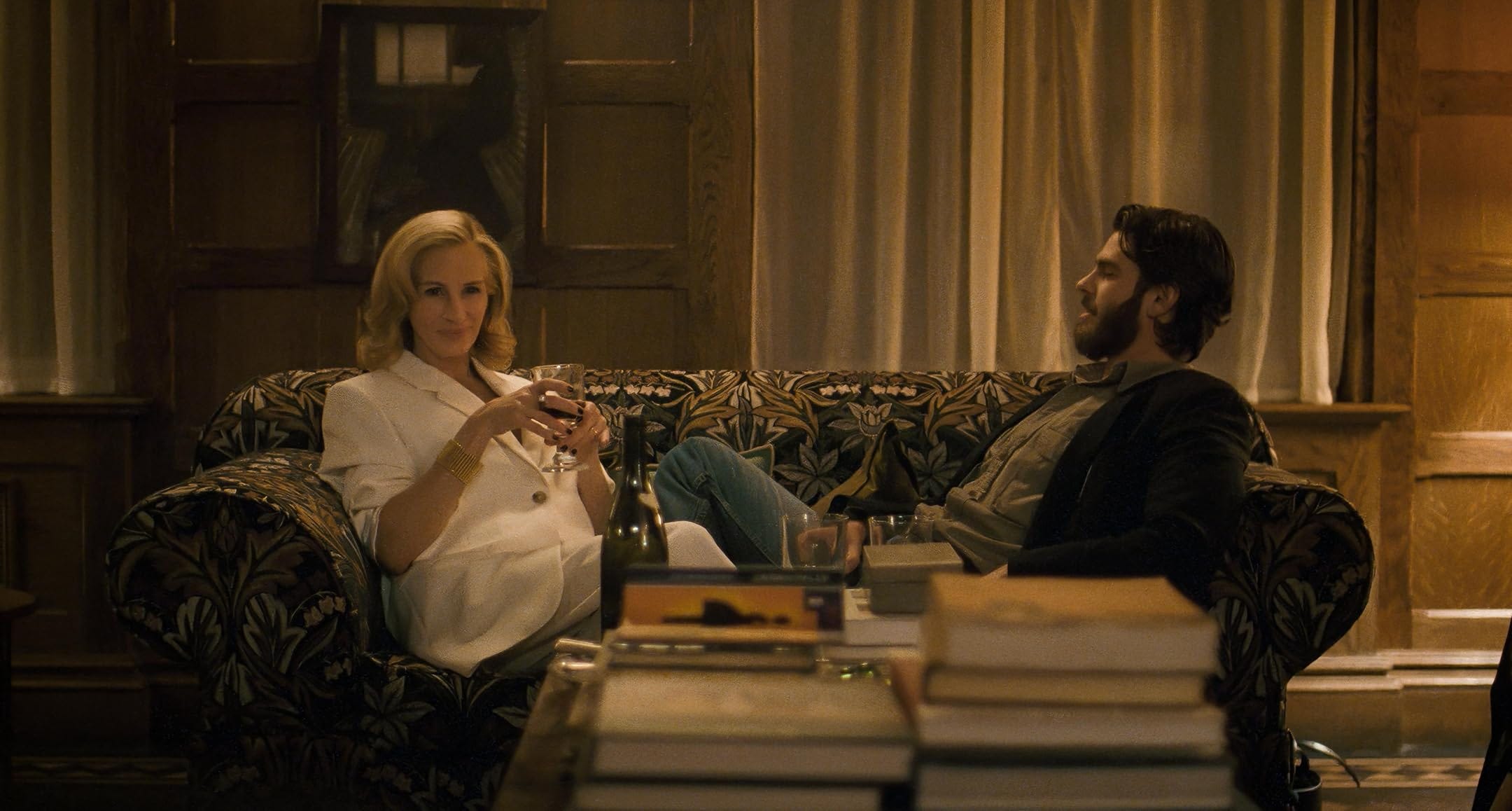
nothing, good or bad, ever affects alma; you have to wonder if there was even a time when a backhanded comment on her sex would have offended her. she’s vaguely amused when one of her white male students claims that she will win tenure over hank just because she’s a woman, while maggie — whose own starchy blazer and shaggy sew-in are clear tools to mold herself in alma’s image — is all stutters and sneers over his jab.
this is the part where i admit that i’m not the hugest fan of ayo’s schtick, especially not as it’s deployed in after the hunt. i used to believe her performance in the bear was only scratching the surface of what she was capable of as an actor. with after the hunt, i’m not so sure. this script, written by nora garrett, demands more from her than she’s willing (or able?) to give — and it’s likewise so tangibly, viscerally insecure about her casting. it works overtime to justify her existence, to give her a dog in this fight. a black queer woman in a white male dominated institution, maggie is already a disrupter — but that’s not enough for a whodunit in which no one can be trusted, which is what after the hunt actually is, at the end of the day. maggie must also epitomize the vices of an entire generation, so garrett and guadagnino throw everything at her character, shaping her into not just an unreliable narrator, but into a loose sketch of The Most Annoying Zoomer You Know. she’s black, but she’s got white billionaire parents. she’s smart, but she doesn’t apply herself. she’s shrewd, but not when it comes to her obvious obsession with alma. she wants justice for her assault — hank losing his job isn’t enough — but she doesn’t seek retribution in the “right” way.
only some of that works, but it all feels like a conscious choice in testing our moral allegiance. after the hunt just goes slightly too far in its attempts to cast doubt on maggie. when she returns to alma’s apartment to recount her assault, drenched by the rain and crouching by the door like a wounded deer, guadagnino’s camera lurks just over her shoulder. her face turned away, obscured by her hair and out of focus, the director makes her impenetrable, indecipherable. that makes it easier to rely on alma and her reactions, the doubt pinching her brow, the cold turn in her voice. we do not connect with maggie because alma does not initially believe maggie. she doesn’t see the person within this story, and the cinematography cleverly reflects that. and all of that would be fine if the film was interested in humanizing maggie in other ways. garrett’s script does as much for alma, stitching together a handful of contradictions and uncomfortable, impossible truths for roberts to devour, kirby-style. we also get a good, long look at hank, whose intoxicating sexuality and autoerotic wit do eventually lose their charm. but maggie’s quirks and flaws feel more like a mismatched costume that ayo just doesn’t fit.
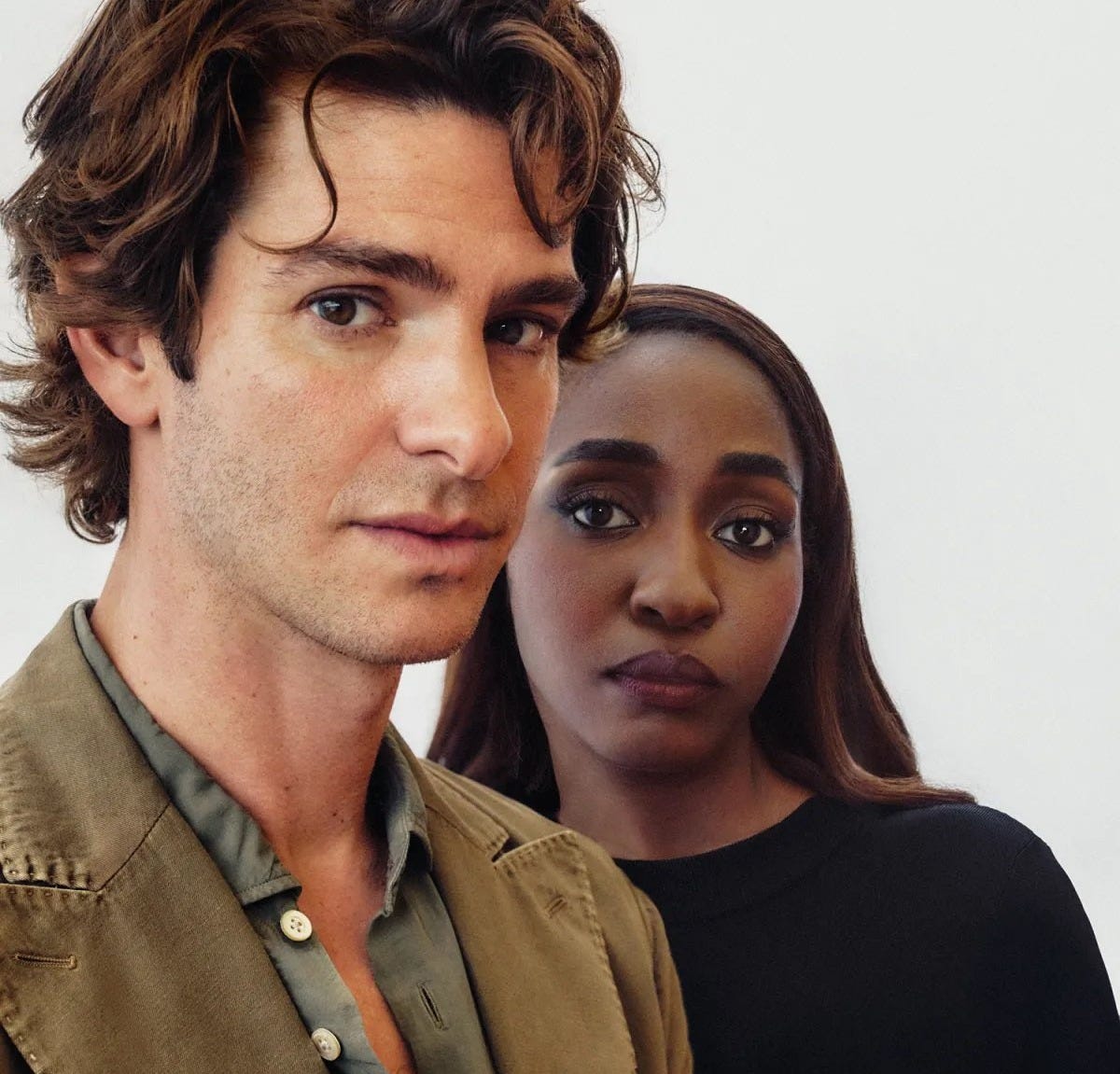
whatever my issues with her performance, after the hunt doesn’t give me much to quibble with either way. it’s not nearly so interested in maggie the person (seriously, she’s barely in this thing) as it is with what her accusation dredges up, for alma especially. as hank’s closest friend, maggie’s mentor, and a lightning rod for their respective desire, alma’s damned no matter whose “side” she chooses. supporting maggie is the right thing — the feminist thing! — to do, but something’s holding her back from doing it. that something includes a dark secret from her past, which maggie gets a clue to early in the film, snooping through alma’s apartment while other guests debate “the perceived existence of a collective morality” or some such headassery down the hall.
is alma so reluctant to believe maggie’s truth because she faced a similar ordeal in her youth? is she the kind of feminist that shuts the door closed behind her, forcing her protégées to earn their stripes by facing the same indignities? is the crippling illness that seems to be shredding her stomach a manifestation of emotions suppressed, of guilt denied? after the hunt really likes making us guess, but it does eventually unravel the mystery of alma. it’s the second-most rewarding aspect of this film, and it’s a real “we’re so back” moment for the julia truthers. alma is her chilliest, most compelling role since, maybe, miss “he tastes like you but sweeter” from closer. she breathes life into her unreadability: there’s a stubborn pride behind it, a resentment, a delusion. it’s incredible, and it pairs perfectly with garfield’s swaggering lothario, michael stuhlbarg’s performance as alma’s long-suffering diva of a husband, and another solid supporting turn from chloë sevigny.4
every intellectual takedown, every ensuing crashout, keeps after the hunt from slipping into an empty exercise in provocation. it’s actually meant to be cringe, i think — or, at least, i hope. but it’s hard to fully enjoy with ayo left holding the bag. her maggie should be the most important piece of this puzzle, but she ultimately serves the same purpose as this film’s academic setting. she’s a means to an end, an ornament that makes this whole thing feel deeper than it is. after the hunt is at its best when using lust and yearning as a weapon, not just against its characters but as a “gotcha!” for the audience. but does that totally work when my loudest lingering thoughts are with the guy staring down an assault allegation, and not the woman he allegedly assaulted? is that the purpose of this satire, to interrogate my biases? does it even know its purpose beyond getting people to talk? i don’t think any review i’ve ever written has asked so many questions. i don’t have any answers, either — and much as that frustrates me, i think i kind of enjoy the frustration, too.
hot guys i’ve been thinking about this week:
yeah, i’m still doing one’a these after taking thousands of words to express my need for andrew garfield. it’s been a long week and there is much to discuss.
i’ve been covering beyond fest (the biggest genre festival in america, maybe? don’t quote me on that?) and seeing many beautiful faces huge on screen. mads mikkelsen is the hottest. in dust bunny he plays a hit man who’s hired by a little girl to kill the monster under her bed. he wears these colorful suits that may or may not be plucked from some wales bonner collection. he looks really hot. it’s really brilliant stuff.
alexander skarsgård in the pillion trailer.
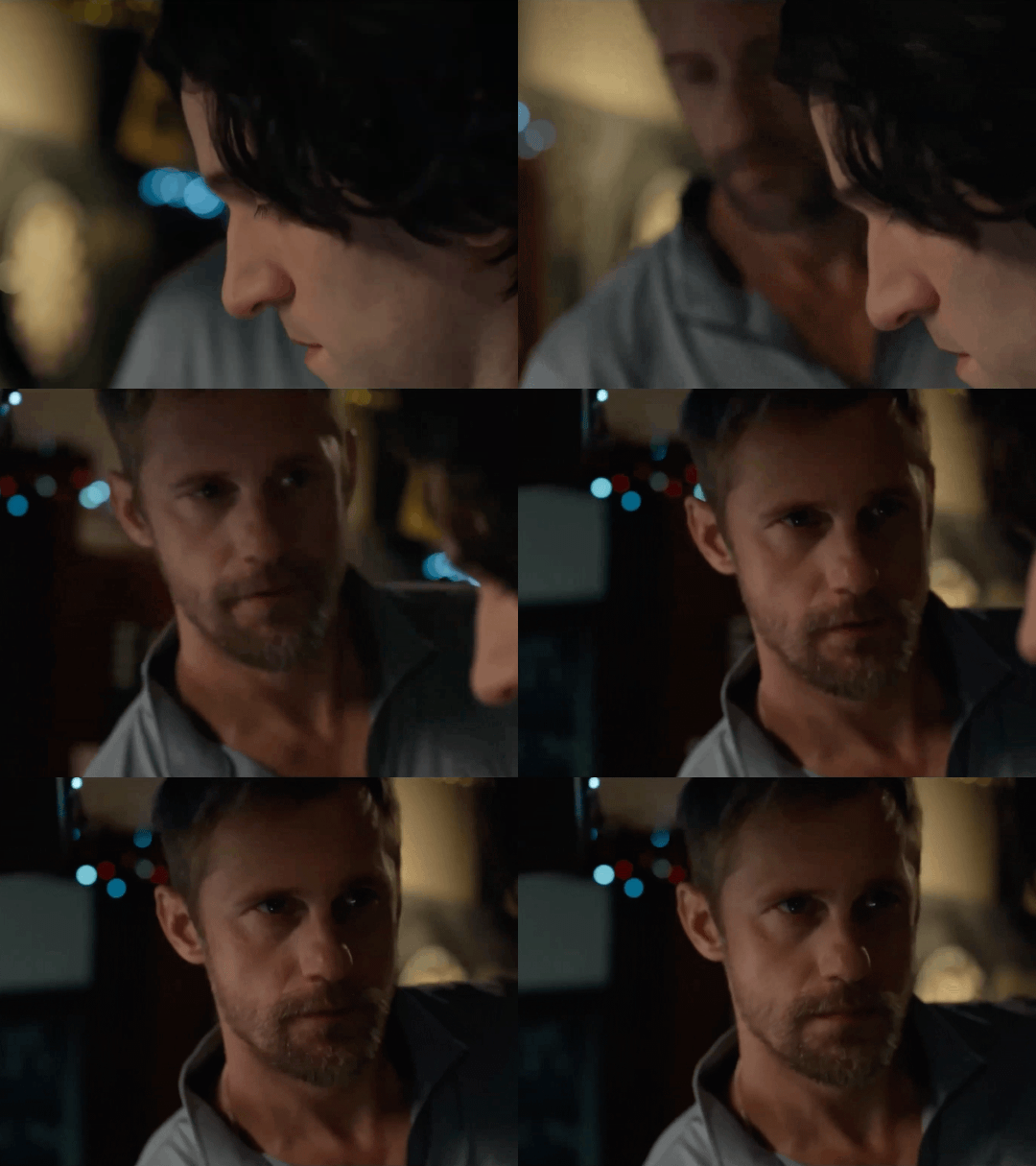
nervous laughter!
oscar isaac in frankenstein. yeah, i saw frankenstein again. as i said on twitter,5 i am chopped and greedy, just like his victor. this watch was at netflix hq, so i had the privilege of sitting basically on top of the screen (unlike my nosebleed seats at toronto’s princess of wales theater, which i still appreciate though i couldn’t see a damn thing), so i was allowed to take in the costumes and sets at my leisure. then i went home and saw that guillermo del toro posted a picture of oscar in said costume and i howled at the moon for a minute.
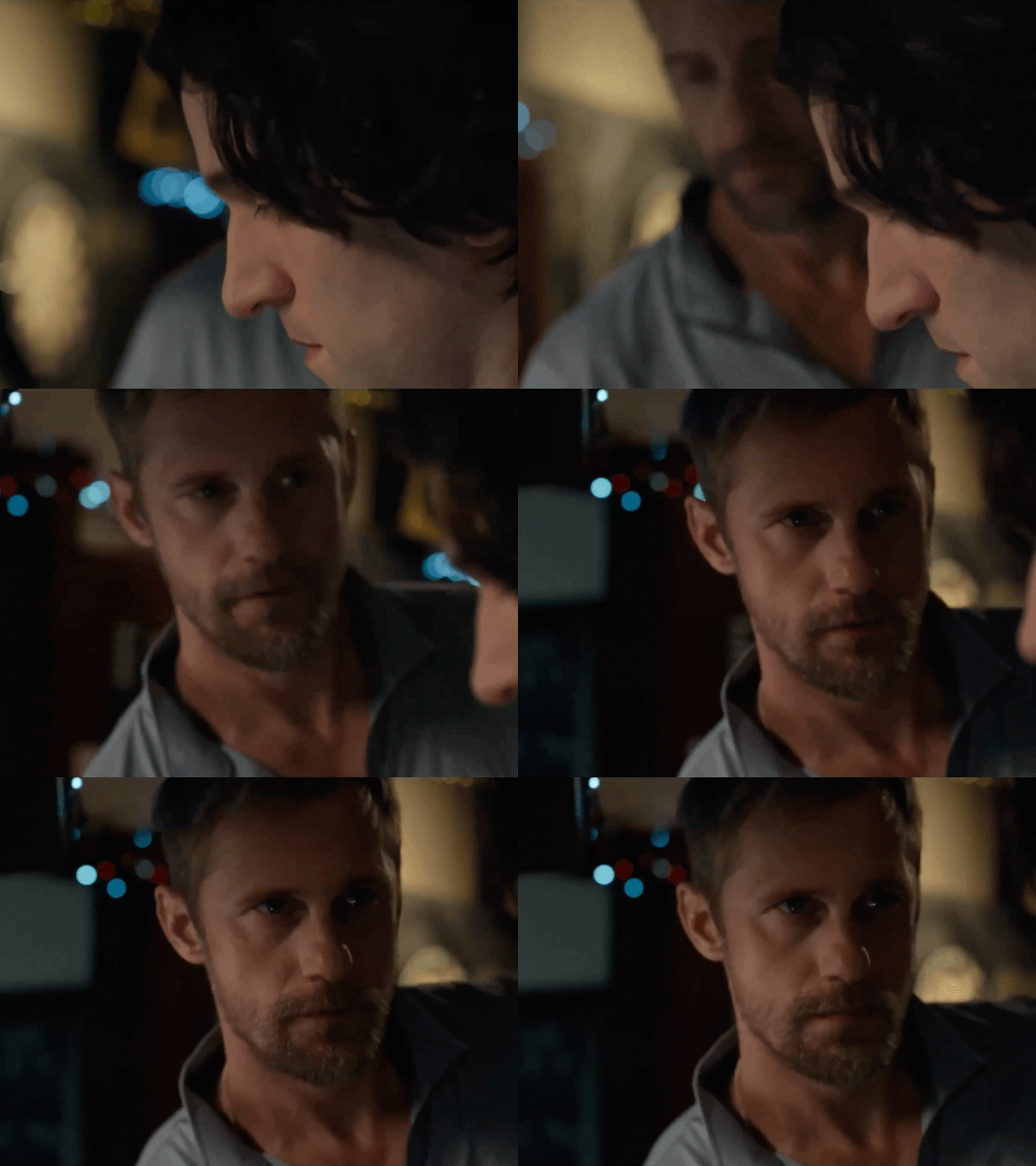
they’re weird for this, idc
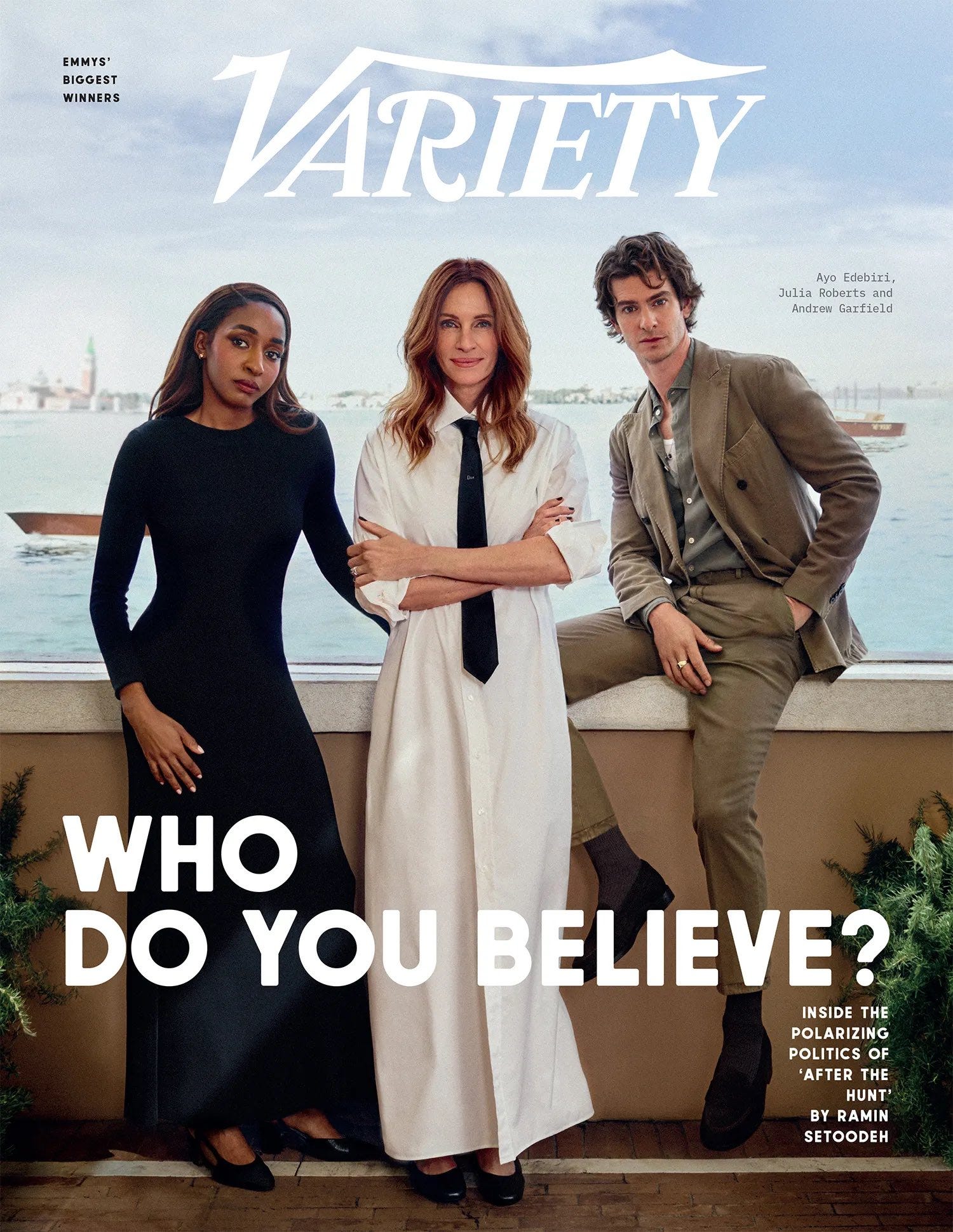
this film is set in 2019, apparently, which makes it a period piece, kind of?
anderson is at dior now, and fittingly just debuted his women’s spring-summer collection — but i can’t say i really liked it. that’s the only fashion opinion you’re getting outta me today!
who’s maybe been given the most atrocious wig of the decade, but enough ink has been spilled on that, i think.
no, i’m not off twitter yet. i’m sorry. though the new t****r s***t album, and all the discourse it’s dredging up, has triggered an impromptu hiatus. small victories.
Really great review, I saw the movie on Friday and am still processing it. As someone who went to grad school and was around those types of circles there's a whole other layer of understanding to these characters that may not work well for people not familiar with their archetype. The movie itself was beautiful in its composition but the story itself is also leaving me with more questions than answers (which I enjoy, but not everyone does)